
Tesla Optimus Robot's "Zero-Shot" Dance Stuns Crowd – All Simulator-Trained?
Tesla Optimus robot masters dance via simulation training! Zero-shot transfer enables real-world moves—no cables, no CGI.

"RoboPub" Publication: 20% Discount Offer Link.
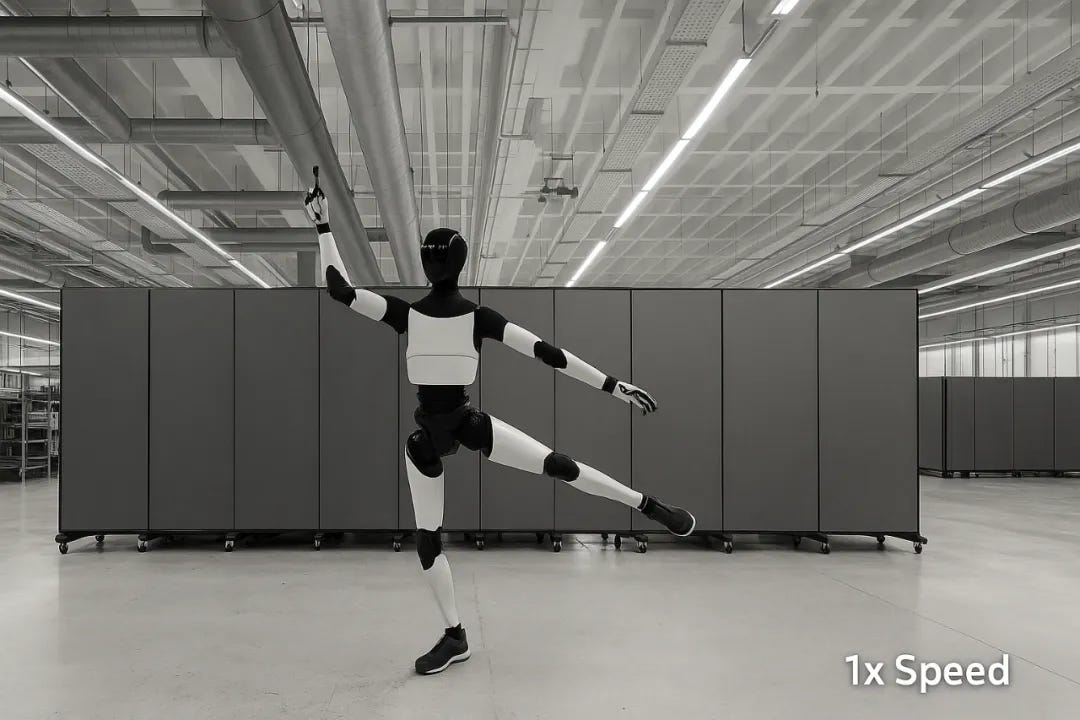
Tesla Optimus Robot's Latest Training Achievements, More Progress to Be Announced Soon!
The Tesla team showcased the latest results:
In early videos, a cable was visible next to Optimus. According to the Tesla robotics team, this was a safety measure to prevent unexpected falls, not for actual support. After all, as an early-stage result, stability and rapid iteration are key.
In subsequent updated videos, Optimus no longer had the cable, and its movements were real-time, with no CGI effects, entirely the result of zero-shot transfer from simulation training to the real world.
Key Highlights
The core highlight this time is that the Optimus robot was fully trained in a simulated environment using reinforcement learning (RL) and successfully achieved “zero-shot transfer” to the real world.
What is “zero-shot transfer”? Simply put, it’s like the robot mastering a complex set of actions—such as dancing or walking—in a virtual world (think of an advanced video game), then being brought into the real world and successfully performing those actions on the first try, without any additional adjustments or training for the real environment. Imagine a student who perfects driving in a simulator and can immediately drive a real car on the road (though real driving tests aren’t that simple!).
Technical Advantages:
Efficiency: Eliminates the need for extensive real-world debugging time.
Safety: Early experimentation can be done freely in the simulator without risking damage to expensive robots.
Cost-Effectiveness: Reduces the cost of physical testing.
To achieve this “seamless” virtual-to-real transition, the team put in significant effort:
They greatly improved the robot model in the simulator, utilizing techniques like domain randomization to enhance the model’s adaptability to real-world environmental variations. These optimizations are not just for show—they will directly contribute to improving the robot’s walking stability, full-body agile control, and other practical scenarios. Additionally, the team drew lessons from hardware and optimized the power configuration.
Final Thoughts
The gap between simulation and reality (sim-to-real gap) remains a challenge. Real-world variations in lighting, object color differences, or unfamiliar ground textures can cause a robot that’s “all-powerful” in the simulator to struggle in reality.
Some netizens have commented that Tesla may be exaggerating its autonomy, and certain demonstrations might involve human intervention.


